Archive for February, 2011

Sometimes, I don’t think that I am making a dent

Sunday, February 27th, 2011

I was speaking to a young, bright, well-trained pediatrician the other night about my experiences helping families of autistic children. Granted, I was representing my belief that there could be iatrogenic causes to some of the diseases we are now seeing. When faced with the thought that you, the doctor, might be the cause of a child’s problems, umm… well, you know what they say about “de Nile”. So, this intelligent physician’s eyes were rolling really far back in her head, and I thought, “What’s happened here? Isn’t it the younger generation who are supposed to be the rebels and the “questioners” (in George Bush parlance)?” I’m an old fogey, and I’m trying to point out that the modern world might contain toxins that are setting an unhealthy stage, and we doctors have piled on a bunch of immune “boosters”, and symptomatic salves, and there is this potentially autoimmune infantile disease epidemic and… and…

In the last 6 month’s of the American Academy of Pediatrics journal there were 23 articles about prematurity (~12% actual reported incidence). There were 5 articles about childhood obesity (~17% incidence cited) and 3 original papers concerning autism (>1% according to latest CDC data). How can a young physician say, “Well, I’m going to have to read more about that,” referring to my “stuff” (as if all of this is merely MY personal issue), if there is practically nothing to read? Yikes, am I the only one here? How do WE convince the up-and-coming medical establishment to think outside the bagel? Let’s see some more intellectual curiosity.

If you care to learn more about this emerging epidemic, you’re going to have to 1) search for other literature, 2) learn from successful practitioners, 3) investigate what resources are available, including the costs and the success rates and 4) really listen to your parents of affected children, not just dismiss their observations.

As is common with medical conditions, the patients’ behaviors affect the situation. No doubt there are opportunity costs as a family decides to go more “natural”, but the alternative (eating junk that may lead to health problems) is really just too risky. Take a look at EVERYTHING that we are doing to our bodies and ask, “Is this tasty treat really safe? Is a lot of it bad for me or my kids?” I am an old pediatrician, but I believe age has granted me wisdom and that it is my duty to pass it on. Read the f***ing label and have some idea what you are putting into your system! If you see the word “artificial” what do you think that it means? Did I make myself clear?

Let’s say that a pregnant woman has x amount of toxin in her body, and she passes x-y amount to the fetus and that fetus can handle that amount. But then, the child gets some antibiotics for some unnecessary reason, and then some vaccine materials and then the natural cold or two (God forbid, we can’t prevent everything). So, the child is faced with x-y+z (= ohno) amount of toxin. Now, he’s a boy, so he doesn’t handle ohno so well (it takes “ohno + a” for girls) and his immune system starts to overreact. When the trigger gets pulled – by an illness, or a toxin – he regresses in speech and language and contact with the outside world as his immune system takes over energy demands. That scenario could represent one form of ASD, the regressive kind.

Or, consider the pregnant woman who passes on x-y toxins to the fetus who can’t handle that load (representing a slightly different genetic background). In her child, x-y = ohno. Maybe, developmental milestones are affected, such as crawling and walking. The body’s G-I apparatus does all that it can to eliminate harmful products, and the child exhibits frequent formula intolerance, GERD and possibly secondary ear infections, diarrhea or constipation. Add a few more toxins (ohno+?) and that system is really overloaded. Perhaps, the presentation could be a different version of autism, the congenital kind.

The reason that there are so many parents’ groups supporting autism and research is that the medical community continues to experience pattern blindness about ASD. The reason that there are so many non-MD practitioners is because the MDs don’t think that there is much that can be done. Moreover, we are ALL responsible for these decisions to poison ourselves and our children. Don’t just blame the government if your kid eats artificially colored and flavored chips all day and swigs sugar-laced fluorescent drinks (or you do). Don’t blame doctors who are trying to save us all from known, terribly tragic and preventable diseases. Don’t simply blame the modern world. We have a brain, and we can see for ourselves that we are being poisoned, and we do have a choice.

I am just asking, “Yo, where are you, young Dr. Kildare?”

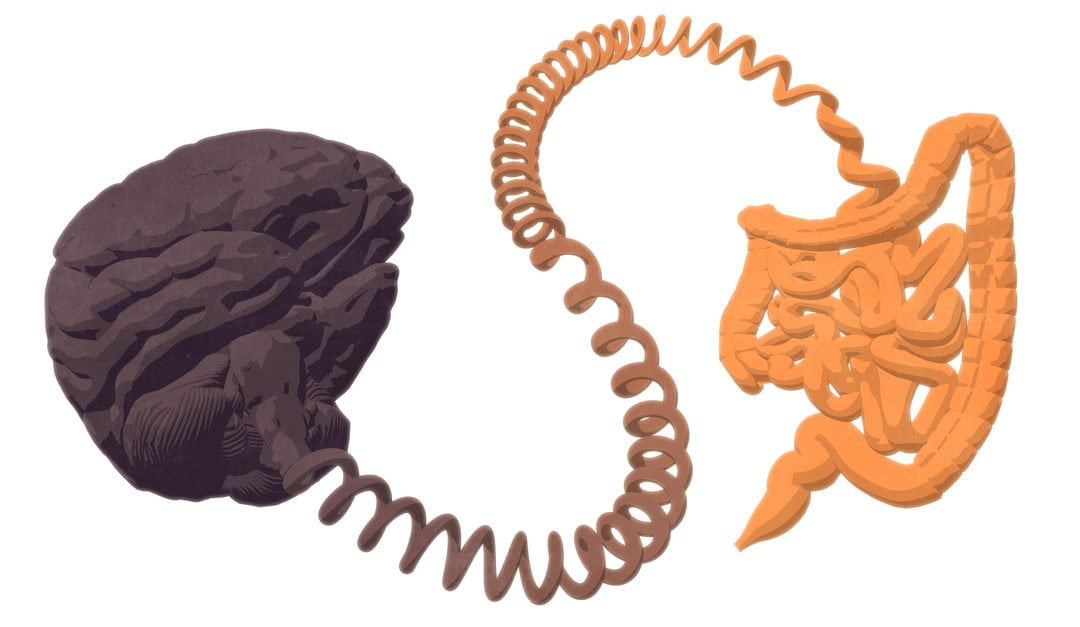
…and the Brain Bone is Connected to the Bowel Bone

Thursday, February 24th, 2011

“What does the G-I system have to do with autism?” The short answer is that it is often associated with ASD and so it needs to be addressed. What if diagnosing intestinal problems and improving gut health in non-verbal children did NOTHING ELSE other than assist in improving their overall well-being? How can anyone find fault with that strategy?

The longer answer is that there is a great deal of scientific evidence documenting a gut-brain connection in everyone, not just autistic patients. Eat a really greasy meal and tell me that you are in the mood to learn new skills. After ingesting some un-yummy fair, aren’t you grouchy? Are you ready to sit still and focus on new activities? When you get hungry, don’t you have trouble concentrating? “Butterflies in your stomach” before an anxious moment? Dr. Michael Gershon of Columbia-Presbyterian University has researched and written about this subject for over 30 years…”Our research is focused on the enteric nervous system (ENS), the intrinsic innervation of the bowel. This is the only part of the peripheral nervous system that is capable of mediating reflex behavior in the absence of input from the brain or spinal cord.” Why is it so difficult for modern medical personnel to accept this concept? Perhaps because it sounds weird, unscientific, and you can’t really SEE that system? Maybe it seems too simplistic. Nevertheless, the existence of the gut-brain connection still engenders debate.

However, once it becomes clear that there is a connection – in everyone – it should become easier to envision how important it would be for a sick child to get the best diagnosis and treatment for a “belly ache”.  Autistic children may never say that their belly hurts, so they deserve our investigation to make sure that it doesn’t. My practice experience shows me how important this connection is for improving “fog”, language acquisition and decreasing disruptive behaviors.

Autism specialists observe various and frequent behaviors that not only appear to be gut-related, but are ameliorated and extinguished when a gastrointestinal problem is addressed. Watch young children push their stomachs against furniture or take odd positions on the floor and ask yourself, “What might be causing that posturing?” My most frequent diagnosis in young children with self-injurious behaviors is abnormal G-I flora. The condition is addressed with aggressive probiotic and anti-fungal protocols. Especially head banging and tantruming can be greatly helped by improving gut health. I often tell patients that the reason why their child appears to have “ants in their pants” is because they have ants in their pants!

So, if we can agree that there is a close relationship between G-I status and state-of-mind, and that non-verbal patients deserve consideration of a problem in that axis, why would it be so impossible to believe that some diets in some patients may prove worthwhile? The well-publicised University of Rochester study claiming “Popular Autism Diet Does Not Demonstrate Behavioral Improvement” specifically excluded “allergic” patients and was only able to enforce the diet on a handful of children for a month. Does that make all of the other families who have insititued such a diet and seen real improvements in their child somehow irrelavent or incorrect?

To many, it (a special diet) makes them look like “kooks”, and I have to object to that. Anyone who understands the time and patience that it takes to raise an ASD-affected child knows that the primary caretaker knows when things are going better.

Now, which exact diet and the kinds of foods that are restricted or included and the tests that test for food sensitivities are all under examination at this time for clinical significance and nutritional wisdom. There’s no dearth of opinion, folk lore or experience here – only of fact. So, patients and practitioners have attempted to improve G-I health by manipulating intake of various foodstuffs in the hope of helping the patient without resorting to medicines in order to address the primary autistic behaviors.

It’s a work in process, but investigating and treating G-I health has proven its value in many ASD patients.

More gastro-blogging to follow.

Patterns in Autism

Thursday, February 17th, 2011

All of my patients are interesting and important, however out of the 7 children whom I examined last Wednesday, the most unusual were two sets of  identical twins.

The boys, Adam and Alex, first presented to me about a year ago as three year-olds with classical signs in all three domains (social, speech, and behavior), though Adam was more “with it” than his brother.  They both were begun on regimes to improve their health and well being and improve energy utilization, plus continuing traditional therapies through the educational system. They have both improved markedly, though Adam continues to make more rapid progress than his brother. In fact, Adam appears all but typical at this time, with only slight delays in speech and language. An interesting aside, their younger sister is definitely not ASD, but loves to flap and jump when she is excited – mimicking what she had observed in her older brothers.

This was the first time that I was seeing Cara and Carly, and it was positively fascinating because one of them has autism, and the other one, well, seems to have escaped it. Their stories are similar to the boys in that they had developmental delays (late crawling and walking) plus delayed speech that led to an ASD diagnosis by 2-1/2 years of age. The parents got help with S&L, OT, PT, PLUS a bunch of ABA. After 6 months, Cara appears neuro-typical (though she is the one with more G-I symptoms) and Carly has made remarkable progress.

So, you have to think, what’s different, and what’s the same? What is it within the families, between each twin, and between the two sets that gives a clue to what is going on with infantile autism? I am aware that I am not the only doctor to think of this – twin studies are ongoing in search of answers through this channel.  That research will discover much more than these clinical observations, I would hope. Back to these patients; historically and medically there are few apparent differences. The most obvious similarity that I was able to ascertain was the common element of chronically challenged G-I tracts in ALL of the kids.

Here are two sets of identical twins exhibiting behaviors that lead one child to have an ASD diagnosis, and the other to other to appear to be more amenable to therapeutic interventions. How could that be? Well, anyone who is friends with a set of identical twins will tell you that many of them are not the same – even as infants. One is fussy while the other is calm, one child seems to catch on better and another seems to be better at sports. Their genes are the same yet the manner in which each child reacts to the environment is different. It really is NOT that surprising then, that sometimes, infants “on the fence” for developing a medical disorder can fall one way or the other depending on a variety of known and unknown forces.

Think of it, there are more autoimmune diseases now than ever before. Asthma is increasing, as is Lupus (SLE) and thyroid disease. Then, there are the disorders which are possibly associated with immunity such as Multiple Sclerosis, Alzheimer’s Disease and many cancers. Some of us get these disorders, others seem to escape them. And children nowadays, for no apparent reason at all, are experiencing an epidemic of childhood autism.

What do we learn from this, young Padawan?

I think that we learn that we  ALL might be  just one or two chemicals away from disaster.

The Top 2 Questions: #2

Thursday, February 10th, 2011

So, getting back to my wife’s most-commonly-asked-spousal question, “What does your husband think about childhood vaccinations (in general, vis-a-vis autism, mercury, their particular kid)?”

I am in the process of creating a multi-part blog about this complicated and controversial subject, but I thought that I should answer the main questions first. Interested readers may want to come back later for the not-so-boring details.

I’m dancing. I’m bobbing, weaving, trying to to be diplomatic. I wouldn’t want to anger the vaccination police. YES! Yes. Yes, I think that some of the childhood vaccinations have caused autism in some of my patients, and probably others as well.

I have simply met too many patients who have explained how their child became extremely ill shortly after injections, followed by the loss of speech and eye contact, only to be offered the explanation that their child’s deterioration was “merely a coincidence.”

Do I think that it has caused all or even most of the epidemic increase in the incidence? Well, if you believe your patients – as any good doctor should – some, but not most cases. Only 10% or 15% of my autism patients have such a medical history, but that is just too many for ME to ignore.

What about the mercury in the vaccinations? It’s not popular to cite Dr. Andrew Wakefield, but, it does deserve further research. It is plausible that it could have been a causative factor, at least in the earliest days of the epidemic. While mercury has been removed from most of the childhood vaccines, there are still scenarios where it could have played a role. One, is that there were plenty of stores of the vaccines around the world for years after the mercury was removed. Two, is that the drug companies could have lied when they said that they removed it – there’s plenty of evidence that they do a great deal of that. Three, there’s still mercury in the flu vaccines, including the one that Mom may have gotten while she was pregnant. All that being said, I do not find elevated metals in the blood or urine of most of my patients, and, if vaccinations play a role in ASD, my focus at this time would be on the vaccines themselves.

Lastly, on this particular question, if you are wondering if  your child got ASD from a “shot”, these are the common issues that I find in those patients who could have been affected:

1. Did the child seem to start out OK or was there always a concern about development? The non-typically developing child might get “triggered” by too many immune challenges, but something else was already going on.

2. Did the child get sick shortly after a previous vaccination? This could be a tip-off to slow down (spread the doses farther apart) and not to give too many vaccines at the same time.

3. Was the child sick at the time of the vaccination in question? Sometimes the child was already showing flu symptoms, and other times they were “nursing” a cold, but didn’t actually get sick until a day or so later.

4. Did the pediatrician give many vaccines on the same day? This is not that uncommon in children who have recurrent illnesses and so they “fall behind” in the inoculation schedule. It is not that rare for a child to receive ten or even twelve products at the same time.

For some patients, it may have just been one too many hits to their delicate, nascent immune system. For others, their story is just too specific and compelling to ignore.

What about all of the research that shows that vaccines are safe? Another blog.

Top Two Autism Questions

Saturday, February 5th, 2011

Jacqueline Udell

My beautiful and patient wife reminded me this morning that, although I have spent a great deal of time blogging about this or that, I haven’t really gotten to the meat of the matter. She works with the public, and when clients become aware of what her husband does, they usually ask one or two common questions:

1. What does he think causes autism (with a common variation – is it really an increase)?

2. What does he think about childhood vaccinations (in general, vis-a-vis autism, mercury, their particular kid)?

I’m going to answer the “cause” question first. It’s not as controversial and less complicated to express.

Autism was first reported in 1942; described by a German psychiatrist who said that it was due to a crazy, cold, “refrigerator” mother who did not parent correctly. Now, Dr. Kanner noted G-I problems in almost all of his early patients, yet he still made that spurious conclusion. Could that be because he was a psychiatrist (very fashionable at the time) and when the only tool that you have is a hammer, everything looks like a nail? Gout isn’t due to your lifestyle. Stomach ulcers are due to bacteria, not stress.

And ASD is due to a whole body disorder in which the brain processes in an atypical fashion and G-I health plays an important part. It is 2011, and, unfortunately, there isn’t much more about the disorder that is certain.

Genetic factors play a role as demonstrated by the preponderance of males, incidence in twins, affected siblings and family histories of affected individuals. But, we’re not fruit flies and it takes millions of years for humans to mutate. Admittedly, and as seen in my own practice, there is now inclusion of individuals who (1) have some primary syndrome and ASD is part of that condition and (2) have some other syndrome and ASD is used to assist in service acquisition. But more than 85% of my patients who are ASD patients do NOT have an identifiable syndrome, other than their autism (similar to the literature). The increase is real – you can even ask the skeptical CDC. “Better detection” plays a very minor role in the reported increase. Ask any elementary school teacher over the age of 40.

The environment plays a role. We live in a toxic soup that our current genetic architecture wasn’t necessarily meant to handle. There seems to be no letup to the poisons that are around and within us. I have one patient who definitely improved upon moving from  his “chinese drywall” manufactured home. Another male patient made advances after moving from a neighborhood which was adjacent to a power grid. The number of studies that would be required to ascertain how even 10 or 20 chemicals interact is high, the 85,000 (and counting) substances in our modern world – infinite possibilities.

Autoimmunity plays another role. There is a great deal of research which documents inflammation throughout the body of ASD patients. While waiting for solid evidence of a more specific nature, my patients improve greatly by identifying areas of inflammation and addressing those issues. “Immune Thrombocytopenic Purpura” (allergy to your platelets that leads to bleeding) used to be called “Idiopathic Thrombocytopenic Purpura” (I don’t know why your platelets are low but that’s why you are bleeding). Saved the acronym.

Epigenetics is the newest term that is invoked in the genesis of ASD. That is, how the gene, which is on your chromosomes, which codes for a protein, which has an effect upon your cells, interacts with the environment, which has many pollutants (or, at least, we’re not sure how the stuff works) and that interaction is what leads to a state of ill health. So, someone might explain, “Oh, autism is due to epigenetics” and for now, that would be right.

As you can read, it’s too long an answer. It can’t be explained in an elevator ride. So, my personal short-version is, “the epidemic is due to an unlucky combination of susceptible people living in the modern world.” Not too satisfying.

Both questions, by the way, could be answered this way,” My husband says, ‘No one really knows!’”

Still to come: The Vaccination Series (about a series of vaccinations). Next, the answer to the second question.

Not Thinking in Pictures

Friday, February 4th, 2011

The various types of autistic behaviors that I see in my medical practice are sometimes bizarre (self-mutilation), sometimes informative (below-the-tummy-rubbing indicating G-I disturbances), sometimes annoying (dropping on the floor and screaming is particularly so) and always interesting to observe. Occasionally, however, a patient presents with such an unusual combination of behaviors that it defines that individual as a category unto itself. Temple Grandin wrote about her abilities in Thinking in Pictures. She described how language took a back seat to the images that she processed in her unique brain, and wrote that many ASD patients have similar abilities and brain structures.

Just to keep me on my toes, I met a 4 year-old patient this week who thinks in word patterns. Actually, he doesn’t seem to think in the neuro-typical sense, yet he appears to be connected to some of his surroundings. However, he processes the world in a completely unusual fashion. He makes fair eye contact with strangers and seems to communicate well with his mother. He is very well behaved and answers to his name. He “reads” everything – books, posters, signs, anything with words on it.  If there is a picture of a dolphin and the word “dolphin”, Jonathan points to the word and says it correctly. The picture is totally ignored. And, it doesn’t seem that Jonathan has any idea that the word and picture are related. Or what a dolphin is. This remarkable young man can read just about any word, and he can sound out those that he doesn’t recognize right away.

Echolalia is one thing. Practice with language. Scripting is another step in that direction. Complex repetition without any sign that there is comprehension is another level altogether.

One of my first ASD patients was an aggressive 11 year-old who could recite a half-hour TV show in, like, 15 seconds (his mother pointed out to me what he was doing). But, it took dozens of viewings to get that information. Jonathan can memorize the dialog of a video the first time, according to his Mom. From what I’ve observed so far, that’s pretty accurate.

Patterns are what seems to make the most sense to Jonathan. He can assemble a complex puzzle (>100 pieces, 6+ years) by himself, and he completes it in his own special way. Most of us would do the outside pieces first, then work toward the middle. This interesting child does “clumps” – putting patterns together until they make up the whole. But it’s the smaller patterns that he seems to appreciate, not the “big picture”.

Were it not for his wonderful Mom and family who have provided conventional interventions, I believe that Jonathan would have appeared similar to the “typical” autistic patient who I first saw in 1975 at Jefferson Hospital. That was a five year-old male, jumping up and down in a painted wooden crib, flapping away and totally unaware of his surroundings or the 20-or-so medical students who were observing him in his hospital room. At the time, the reported incidence was said to be “one-in-five-to-ten-thousand” children (which only meant that it was really rare since there were no Internet registries and few support groups). Those were the days when doctors told parents to put such patients into an institution with the other “retarded” children.

This child has several medical conditions, including G-I symptoms and allergies, which require attention. As we begin to get Jonathan on a more healthy path, I can’t help but wonder what will happen to some of his special qualities. There is a profound block somewhere in his processing that is, rightly so, his mother’s chief concern. I am fortunate that the family has sought my advice and allowed me to be part of their journey.

So little time, so much to learn. Stay tuned.

So, You Cure Autism with Diet and Vitamins, huh?

Thursday, February 3rd, 2011

Absolutely not! Though I often get this question (preceded by a heavy sigh) from the “traditional” scientific community when I try to explain how complementary and alternative medicine approaches this new childhood epidemic. What “DAN” practitioners do is listen to the family, observe and test patients in order to diagnose states of dis-ease in an attempt to correct abnormalities that can be corrected and make the patient as healthy as possible.


This is an important paradigm shift – that Autism Spectrum Disorder is a whole body disorder, not a psychiatric one.

While this may not be the popular position to take, it represents real hope for millions of families that their child may have correctable conditions which will ultimately enhance their ability to recover and progress in all areas of their life.

What are the most common findings in children with developmental delays? After eliminating other and known causes of behavioral conditions, the two most common areas where children exhibit co-morbid conditions are in the gut and in their overactive immune systems. Now, for those of you who don’t see how there is a relationship between our intestines and our brain, I ask “how well do you concentrate after you have had a rotten meal?” Are you ready to learn a new task? Are you chipper and fun? Or do you tend to be grouchy with a short attention span and just want to crawl up into a ball in the corner of the room (sound like anyone that you know)?

For those who believe that “immune” only refers to “itching” or “rashes”, I would remind you that asthma is an autoimmune disease that affects breathing, lupus is an autoimmune disorder which affects connective tissue, and rheumatoid arthritis is when your body reacts against your joints, causing swelling and eventually destruction of tissue. Just to name a few of the many autoimmune diseases which are increasing to epidemic levels. Today’s youngsters represent the “canary in the coalmine”, exposed to over 85,000 chemicals in the air, food and water – contaminants which only came into being in this century. We have woefully little information about how even one of these new agents affect developing humans, so imagine the dearth of information about 1000’s of contaminants, plus the unknown information about what havoc might be wreaked with the interactions such new materials.

Once this first goal of getting the child healthy is underway, therapies such as Occupational, Physical, Speech and Language, Applied Behavioral, hippo-therapy  (horses), aqua-therapy, dolphin therapy, neuro-feedback, sensory integration and hearing therapies (among others) become that much more effective for the newly-awakened synapses that are starving for input. Once the patient is awake and aware, recovery can begin and the possibilities for improvement are, literally, unknown.

So, can you cure autism with diet and vitamins? It’s a start!


Do All ‘DAN’ Doctors Practice the Same?

Tuesday, February 1st, 2011

For most of my three and a half decade career, I practiced conventional medicine as fed to me by my medical school (Thomas Jefferson University), my specialty training (Emory University), my practices in Florida and throughout the US, and the drug companies’ detail salespeople. So, several years ago, when I found myself knee-deep in the Autism Spectrum Disorder epidemic, I sought traditional science and read the pediatric and neurologic literature that seemed appropriate. No answers there. In fact, a conspicuous vacuum.

January 20, 2011

Flu vaccine causing infant seizures; FDA to investigate

The Sanofi-Aventis flu vaccine known as “Fluzone” is causing febrile seizures in children, the FDA revealed yesterday. According to the FDA, 42 cases of seizures have been reported in children receiving the Fluzone vaccine. Most of the children suffering seizures are under the age of two.
The FDA went out of its way to claim that even though these children suffered seizures, they’re all fine now. “All children recovered and no lasting effects have been seen,” the FDA said…

Nearly all the reported seizures occurred within 24 hours after the children received the Fluzone vaccine…
…”At this point no correlation between influenza vaccine and febrile seizures has been established,” said Sanofi-Aventis
. “Adverse events after vaccination may be causally related to vaccine or may be coincidental.”

And finally, the coup-de-gras: Recommendations for the use of flu vaccine in children have not changed. CDC recommends that all persons ages 6 months and older receive a flu vaccine each year. Anderson Cooper, you had plenty to say about the “fake” research on autism. Where are you on this story? Brian Deer (Excavator of the latest Dr. Andrew Wakefield re-vilification), doesn’t this flu vaccine side effect story make you want to do research? CNN, CBS, ABC, The New York Times – you couldn’t wait to announce Popular Autism Diet Does Not Demonstrate Behavioral Improvement, which was a skimpy study which excluded the most susceptible patients from evaluation. GF/CF has yet to be associated with increased seizure activity. Fourteen autistic kids don’t improve from a month on a diet – that is considered newsworthy, yet 42 children (so far) who suffer convulsions requires further verification. Yo, American Academy of Pediatrics – knock knock – anyone home?

The complementary and alternative medical community known as “DAN” doctors came together as a result of a grass-roots movement within the general medical community. For the most it has been populated by physicians (among other professionals) who have been personally touched by the enigma of the disorder, who have similarly found a dead-end when it comes to general medical knowledge.

Skipping through the details – the Autism Spectrum Disorder community was shown a path which was created by traditionally-trained medical professionals. With the research by CARD that ABA plus biomedical intervention could have a positive effect on outcome, DAN doctors gained some respect. Skepticism from the traditional medical community is understandable. Their rebuke is unacceptable.

So, do we all practice the same way? Like other subspecialties in medicine, we have our differences. Some gastroenterologists scope, some ask you to swallow (barium). Some oncologists use radiation… you get the point. But we do have  common goals: 1) continue to alert the pediatric community to question why and diagnose autism as early as possible, 2) to notify the pediatric neurologists that diagnosis and referrals for OT, PT, S&L, ABA are not the only answer that the medical community has to offer a family in their journey to help their children and 3) to actually help ASD patients and their families.

Oh, and I have a lot more to write about concerning vaccine safety!

Categories Archives Links Contact Us

Brian D. Udell MD
2751 Executive Park Drive
Suite 201
Weston, FL 33331
Office phone – 954-873-8413
Fax – 954-384-2287

Email bdumd@childdev.org
Website http://www.childdev.org

© Copyright theautismdoctor.com 2010.
All Rights Reserved