Archive for November, 2011

Autism and the Environment Part 3-The Present

Friday, November 25th, 2011

Coming into this century, there was still a debate about whether ASD was increasing or were doctors just adding more patients because of broader criteria or previously unrecognized symptoms? The CDC has pretty much answered that one. So have school teachers and administrators, Speech and Language therapists, and any other child care professionals over the age of 40. Autism Speaks has spent a great deal of resources trying to pin down the genetics that are ‘causing’ the disorder. Well, genetics ain’t causing it, the environment is; and family studies have, for the most part, succeeded in identifying susceptibility (for example, siblings, male sex, advancing parental age).

The most clarity about this epidemic (we can call it that now – especially since there is no official definition of  the word) has come from research performed by docs such as Drs. Robert Hendren, Jill James and Judy Van de Water. Then there are the practicing DAN! practitioners, especially Drs. Bradstreet and Rossignol who have been brave enough to publish their clinical and research experience. My hero (she has many other admirers) is Martha Herbert, MD, PhD. Her neurological knowledge and background has helped establish structural findings consistent in autism, especially white matter changes in the brain. Her practitioner (and practical) side has noted the improvements that patients have made, the sad state of the environment that plays a role, and the community of parents who are fighting to find guidance.

Dr. Herbert has challenged the conventional paradigm by declaring that ASD looks more like a whole body disorder that also affects the brain. That notion is consistent with the observation that there are many autisms, that the susceptible individuals could be the children born in this millennium especially, that there are other symptoms and signs that don’t involve the central nervous system, and that patients can recover function. Thanks, Martha.

What does this mean for your ASD affected child? It means that there is an approach and protocols that can be applied to specific patients in order to improve their condition. The air, food, water, shelter, clothing and medications that we are now using are all suspect and require closer scrutiny. The ASD patient should be carefully examined for G-I health, sleep patterns, nutritional intake, and of course, neurologic manifestations. A search needs to take place for ongoing inflammation. Even if a specific abnormality is not the cause of autism, oxidation sets up a vicious cycle leading to poor downstream function. All of a patient’s systems need to be checked in order to help correct a malfunctioning network. Attempts should then be made to re-invigorate poorly functioning body engines. And finally, therapies should be directed at teaching (or re-teaching) the previously damaged pathways.

Most practicing neurologists appear to be completely ignorant of the fact that ASD is not a fixed genetic disease. Conventional scientific literature is now documenting the disordered state of the nervous system, the paucity of genetic variation where there should be complexity, the presence of inflammation where there shouldn’t be, and the resulting clinical picture that we call autism. Hopefully, that will result in more specific testing and a greater ability to target therapies and reverse the processes that lead to altered function. I can’t wait.

Treating Molluscum in Autism – One Mom’s Story

Monday, November 21st, 2011

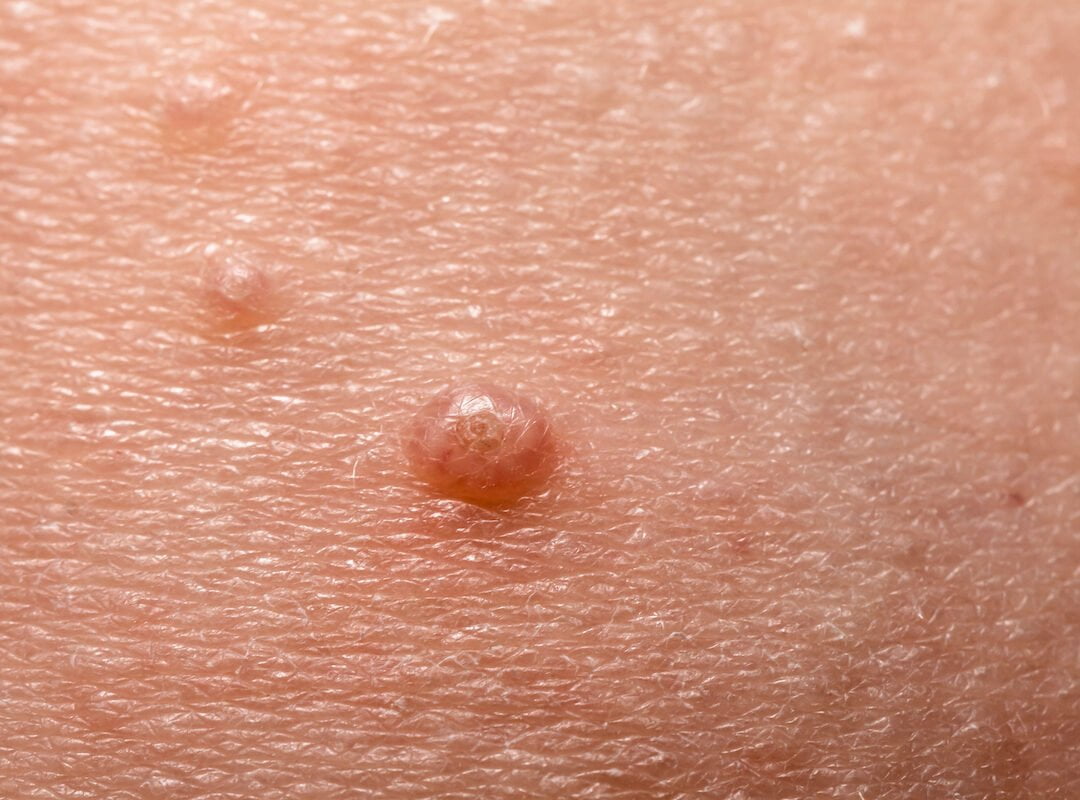
Molluscum Contagiosum is a skin rash that looks like a lot of tiny warts and it is caused by a virus (aptly named the molluscum contagiosum virus). It is spread by skin to skin contact (yes, your child can get it at day care). The incubation period (how long it takes from the time of contact until the bumps appear) is 2- 7 weeks and the rash can last for up to 6 months or longer. Wikipedia and Medscape (among many others) have plenty of information on diagnosis and treatment. I am quite surprised that no literature exists that links this  skin condition to ASD, but it feels as there are lots of patients in our practice who do suffer from this (itching, discomfort, infections, bleeding, not to mention it  looks alarming and it’s contagious). Perhaps it is because ASD patients suffer from autoimmunity, and so viral infections are more likely. Certainly, affected individuals who also exhibit expressive language delay and experience various sensory issues represent a particular challenge for the autism doctor.

Treatments involve ‘burning’ the lesions with chemicals, extreme cold, various skin medications, herbal medications, lasers, surgery and oral preparations. Honestly, I have not found any one treatment to work better than another, and dermatologists seem no better than parents at knowing what to do. With that in mind, I have one Mom in our practice who has had a fair amount of experience in this arena, and her blog might be helpful to our wonderful readership:

Treating Molluscum Contagiosum: Our Mini Saga by RCB

First I tried zymaderm: http://molluscum-contagiosum.net. Good pix on this site, so it helps to identify if this is indeed what your child has. It is cheapest to purchase one vial from www.vitacost.com, which worked well for one daughter, and eliminated it. But, it just controlled it for the other child, and although it didn’t eliminate it, it appeared that it prevented spreading (as in, if I stopped using it, the virus continued to spread).

I used this protocol throughout: .5 -1 C vinegar and 1-2 tbsp bleach in bath water. This controlled the secondary bacterial related infection as well as not sharing towels, changing towels aft each use, changing underwear 2x per day and PJ bottoms everyday, washing all items in hot water, plus bleach (I tried to use whites), if possible.

I also tried the following:

Homeopathic thuja – traditional treatment for warts
Tried: tea tree oil (be careful you are not applying the strait concentrate, it will burn)
Tried: apple cider vinegar directly/overnight w/bandaids
Tried: homeopathic sulfer – a purging remedy
Tried: aloe gel
Tried: monostat-type cream, a yeast related therapy, as this virus can be associated with an overabundance of yeast
Tried: immunity boosting items, including probiotics and vitamins

Another suggestion, which seems to work for some types of this condition, and possibly adult molluscum (which is often STD related) is expressing the extremely contagious “white” center, (sorry to be graphic here…) like “popping” a pimple, and using alcohol or tea tree oil, but this didn’t work for my child’s lesions (the centers couldn’t be expressed).

The biggest nightmare? We  finally broke down and went to the dermatologist, who treated about 15 of the lesions with blister inducing treatments. Couldn’t send our child to school, she couldn’t even sit on the potty from all the painful blisters. Those lesions were treated, but the treatment has left scars, didn’t treat the root of the problem, and the virus didn’t go away. There are several other conventional suggestions we didn’t try because I was nervous about immuno-suppressive treatments, but we would have tried them if I hadn’t found the right remedy.

What FINALLY worked was… Sovereign Silver first aid gel! I had read that colloidial silver taken internally worked, but before I tried that, I got this gel (in desperation) from Whole foods. It works great for cuts, too. It contains homeopathic argentum metallicum (never heard of it in traditional homeopathy), in a base of silver-related items. I believe my success with this gel is as a result of my daughter’s individual constitution, and I just hit on the right remedy for her. Go figure.

Doctors tell a medically-related joke that, if you don’t treat MC, it will go away in about 6 weeks, but if you DO treat it, it will take about a month-and-a-half. This Mom’s journey might help a bunch of patients, it seems inexpensive and safe, and I would suggest giving it a try. As always, I am eager to hear other advice and I would be happy to post any patient experiences that will add to the knowledge.

TheAutismDoctor Addendum… I have found this EmedicineHealth webpage to provide an interesting review of possibly useful medicines that have been reported.

National Autism Association Fall 2011 Conference

Monday, November 14th, 2011

By reporting the highlights of the various conferences that I attend, I have found that 1) it helps me to recall and imprint the information and 2) it helps families who weren’t at the conference to gain knowledge which might be of value for their child. Although this is in no way equal to having attended, this summary will also guide readers about where to look on the Internet to read more about these topics, and/or to attend future seminars.

Dr. Dan Rossignol was a major presenter this year. He spoke about Folate Receptor Autoimmunity in Autism Spectrum Disorders. The resulting relative folate deficiency could be a significant contributing factor to many cases of autism because of reduced brain metabolism and energy production. In his inimitable style, Dr. Rossignol presented about a thousand scientific papers discussing his position, and it certainly seemed to make sense from where I sat. Suffice it to say that a) cow’s milk might contribute to the problem, b) giving folic acid to pregnant moms may not be the correct form of the vitamin, c) there are both blocking and binding antibodies and so autoimmunity plays a large part and d) folinic acid (the active form of folate) may ameliorate the situation.

Dr. Rossignol’s other lecture was Mitochondrial Dysfunction in Seizures and ASD. First, I love seeing the cartoon of the electron transport chain that produces cellular energy (can’t get enough of that one) and Dr. R has perfected this in his presentation. The point of his lecture is that, although ASD patients don’t necessarily have full-blown mitochondrial disease, there appears to be a great deal of dysfunction in the cell’s ability to make and store energy and so there are downstream symptoms that appear very much like autism. Again, lots of supporting evidence was presented as well as treatments – many of which are the same energy enhancing therapies that we already utilize in the biomedical protocols. Speaking ever faster, then Dr. R gave an hour lecture – in 15 minutes – about the occurrence of seizure-like activity (if not actual seizures) which may contribute to many autistic symptoms.

Also, along with Drs. Usman and Berger, Dr. Rossignol directed a very thorough ‘question and answer’ session. The topic of hyperbaric oxygen was covered in some detail, especially the research experience that showed positive responses to this controversial therapy. I was a bit disappointed that Dr. R did NOT cover the CARD HBOT study which was not able to conclude the same positive results as his research, which was funded by the makers of the chamber. However, for the parents who attended this session, they got to ask really specific questions about their children and the physicians were quite forthcoming with their advice.

Scott Smith, a physician’s assistant and one-time colleague of Drs. Rossignol and Bradstreet, presented a very informative lecture about P.A.N.D.A.S., which is an autoimmune syndrome whose symptoms closely overlap those of autism. His point was that testing, diagnosis and treatment are similarly related in the two entities, and that we can learn a lot about ASD from studying patients who suffer from the debilitating symptoms of P.A.N.D.A.S., including severe OCDs, tics, behavioral disturbances and regressions in cognition and language.

Dr. William Shaw, the Director of Great Plains Laboratory gave a very enlightening presentation about cholesterol deficiencies which may occur in ASD patients, resulting in decreased brain structure and function. He discussed  the importance of the Sonic Hedgehog protein (yep, it’s named after a game character), a major signaling protein which could be altered in the presence of low cholesterol and therefore lead to symptoms, including autism. Cholesterol is also important in the binding of serotonin and oxytocin, which have also been implicated in ASD symptomatology. Oxytocin was discussed a lot during the conference – not much to report other than anecdotal improvements.

Dr. Anju Usman’s lecture was Autism and the Autonomic Nervous System. There was more evidence about the benefits of oxytocin, especially when combined with secretin (which was a popular ASD therapy several years ago). The importance of cortisol and a normal biorhythm was presented, especially when disturbances occur and the autonomic nervous system (sympathetic and parasympathetic) becomes unbalanced, resulting in many symptoms which autistic individuals experience. Just hearing Dr. Usman calms the listener – I’m sure that her families appreciate her wonderful demeanor.

Dr. Elizabeth Mumper of the Rimland Center gave a wonderful talk about starting therapy for the autistic child. I mention this because any parent (or professional) who is new to the ASD puzzle will gain a great deal of knowledge by attending one of her lectures.

Dr. Andrew Wakefield gave a presentation about his upcoming book, Waging War on the Autistic Child. Look, I love hearing Andy speak (that British accent is so compelling) and he got a really raw deal from the medical community. But, I’m not sure if perhaps he has jumped the shark?? You know, gone overboard with a presentation about how one family got screwed by the government, school system and complicit, ignorant, unyielding doctors who didn’t agree with how one set of parents were raising their children. What else is new? I would like to see Dr. Wakefield focus more on what we CAN DO about it – the science and the research that will force change through knowledge.

The most illuminating presentation, I found, was by Raun Kaufman, a recovered autism patient. His dad, Barry Neil Kaufman, wrote the book, Son-Rise, which documented the journey. Raun was dynamic, entertaining and informative. His organization, The Autism Treatment Center of America, provides expertise and education so that parents can actually help their kids out of their autistic world by entering it and enhancing interactions which can then be generalized to other areas in their lives.

But the best thing about this weekend’s conference? It was the sound of laughter coming from parents and squealing of kids in the swimming pool. I couldn’t stay to hear Dr. Julie Buckley’s lecture about Caring for the Caregiver, but I bet relaxing and having fun must be part of her prescription.

ASD and ADHD from the Teacher’s POV

Wednesday, November 9th, 2011

Sean Manning Udell

I recently had the pleasure of observing my talented and diligent son, Sean, at his job as a Special Education Teacher for 6th and 7th grade students in Denver, CO. As part of the organization Teach for America, he has been assigned to a new charter school with about 220 mostly Hispanic children from families (>90%) who are living below the poverty level.

All of those outside forces notwithstanding, the situation involves a very familiar school experience for many special students from all across the nation. Sean teaches math in a pullout class of 8, and inclusion classes of 21 to 32 children.

By observing this group of Special Ed kids, the main medical diagnosis that I could ascertain was ADHD, with only a few on the “Spectrum” (ASD).  The major challenges that they faced were significant learning difficulties and severely disruptive behaviors. Some of the ESE (Exceptional Student Education) students were on some type of medication, but most were not. As a result, the children, the student body and the staff has had to deal with a great deal of ‘acting out’ behaviors that require attention, time, mitigation and prevention strategies.

In spite of all of these preoccupations, what I found most interesting was the belief and effort that the teachers displayed that they would accomplish their goals and help the students learn skills to become successful adults. I was struck by the amount of time that the teachers spent coordinating their activities so that the more challenged kids moved pretty seamlessly in and out of the typical population. The staff are all fairly young, enthusiastic and bright young men and women who are obviously dedicated to their profession and their students. They worked as a team and they all appeared to be on the same page about which students required what intervention(s) in order to better their educational experience, rather than simply ‘house’ them until the day was over. The teachers were hard at work in their lounge from very early in the morning until long after the children had gone home. Then, there was the homework – lessons for the next day, calling the parents of the most troubled children and learning strategies to improve their performance.

Later in the day, as I encountered Sean’s colleagues, they were all very interested in my view of how the school was performing. “What do you think about Calvin (a particularly interesting but disruptive 11 year-old), Dr. Udell?” they would ask. “Did you have an interesting experience today?” Well, my main reaction was, “Geez, I really didn’t appreciate all of the difficulties that you guys face.” The experience certainly didn’t fit my recollection of elementary and middle school days in the last century. And, frankly, as part of my medical practice, I spend a great deal of time listening to parents talk about the school’s failure to address their particular child’s needs.

So, what I have learned is this: It can be very instructive if parents of older children take the time to observe what is really going on with your child at school, rather than accept or even complain that, “It’s not enough.” I think that, if you (the parent) could possibly look through a one-way mirror (or camera focused on just YOUR child) you might find it amazing that anything gets done at all. You might witness how much work it takes when even one child is unfocused and disruptive or acts out behaviorally. You might wonder how the teacher is able to re-focus the rest of the class and go on with lessons. It can’t all be put on the schools’ shoulders. Maybe this isn’t the most popular opinion – and I know that equal access to education includes developmental  disorders – but more support, volunteerism, and/or assistance is in order. I’m not accusing diligent parents or minimizing tired or lazy staff, just trying to help level the playing field for my wonderful son and all of the other committed teaching professionals like him. Teachers need your help, understanding and support.

A Mom’s Journey with Autism

Sunday, November 6th, 2011

I have the most wonderful pediatric practice and my patients are always helping me to be a better doctor. Here is one Mom’s story of courage and determination that might help other parents keep the faith:

He came to us on a Tuesday, slowly and painfully easing his way into the world just after the new year. When the doctor placed Benjamin on my belly I felt that we had finally done it… after several miscarriages and several visits to the fertility specialist, we finally had our baby. I felt lighter, could breathe more easily, and for a moment, believed that all was right with the world.

Little did I know that the problems we previously encountered were nothing compared to the long, uncharted road that we were about to travel.

The Beginning

The first week or so flew by in tranquil bliss. Just as I was getting used to the mom thing, Benji awoke from his newborn slumber with relentless crying. My pediatrician suggested that Benji was a cranky baby who might grow up to be a CEO someday and perhaps I was a nervous first time mom. This definitely wasn’t what I imagined motherhood to be like and all of the other new moms around me didn’t appear to have half the trouble I did. The only time Benji was at peace was when he was being held and rocked which was tiring for anyone to manage; it was exhausting for this sleep-deprived, hormonal new mom.

Nothing about being Benji’s mom was ever easy again. My instincts told me that something was wrong, really wrong.

The days rolled into the nights and I quickly began to dread getting up in the morning. I couldn’t take him anywhere since the car made him cry, noises made him cry and most people made him cry also. I felt so alone. In my darkest moments, I wondered why I had been so desperate to have a child.

Milestones were extremely traumatic. Nothing came easily. Benji spent what seemed like months trying to get his hands and legs to move in sync in order to crawl. He was frustrated and cranky much of his waking hours. After months of practice, Benji finally crawled…it was backward, but at least he moved! Learning to walk was equally perplexing. It started with an odd maneuver to reach a standing position…instead of using his hands or arms to help him stand up, Benji propelled himself to a standing position using his knees.  Within a few days, he took his first steps. I was elated! Benji was only 13 months and he was able to walk! The strange part was that he didn’t, rather he wouldn’t move unless a familiar adult held his hand.

Whenever we saw our pediatrician, I tried to voice my concerns that Benji seemed different than other kids. He cried more, played less and was not as curious as the other babies at music and gym class. He tried and tried to pick up small pieces of food off his high chair, but just couldn’t seem to get his fingers to work together. He didn’t laugh or smile when I tried to engage him in a game of peek-a-boo.  Communication came in the form of cries, grunts and one word, “hey.” Unlike his peers, he didn’t point or use the words “mama or dada.”

Despite our pediatrician’s assurances that Benji was developing fine, my instincts told me something wasn’t right.

Acting on my hunch

One night he jumped out of his crib. Lots of toddlers do this, so I wasn’t that upset that he jumped out… I was more alarmed by his reaction. Instead of being excited or thrilled by his ability to escape, his fear was overwhelming. I knew that his reaction was “over the top.” I picked him up from the floor and he was hysterical, then vomited all over me. That is the same thing he did every time we went to the doctor.

Benji’s crib escape finally made me act upon my hunch that something wasn’t right. The next morning I called several moms looking for someone who might be able to make sense of my baby’s strange behaviors. Several people recommended a “play therapist.” We saw her the next day. Benji spent the entire session with her crying.

She sent me home with a book, The Out of Sync Child, Carol Kranowitz. As I read the book, I felt defensive. I thought, this isn’t my child:

 -Doesn’t process stimuli correctly, over-reactive to some thing and under-reactive to others,

 -Feels uncomfortable in own body,

 -Becomes agitated by certain fabrics and textures.

In reality, for example, socks, collared shirts, and bathing suits were all sensory triggers for him. Even though I didn’t want to acknowledge it, when the words where right there in front of me I knew they accurately described my child.

Starting on a long, scary journey

By the time he was 20 months old, Benji was working with an occupational and a speech therapist. After a year of this, he still wasn’t talking but finally decided to let go of my hand and walk independently.

There were people all around me, but I never felt so alone. To me it seemed that every other family I knew had a different experience than we did. Their kids were talking and liked to be with others. Their kids didn’t scream in fear when an electronic cart in the grocery store beeped before backing up. Their kids played with toys instead of throwing them or trying to spin them.

The more therapies we added to our schedule, the more apparent it became that Benji’s problems were real and significant. I was stressed and tense all of the time.  Not only was I beginning to understand what Benji couldn’t do that he should have been able to do – according to all of the milestone charts from our therapists; I also spent an inordinate amount of time trying to keep Benji calm enough to take in what we were working on.

Slow Progress, Loss of Hope

My low point came on a Tuesday afternoon in a conference room with our occupational and speech therapists.  I think what they really wanted to tell us was that Benji had Autism. Instead, they said that he wasn’t making the kind of progress one would expect after a year of occupational and speech therapy.

He was two and a half years old and couldn’t say a word.

He still didn’t play with toys as they were intended.

He still couldn’t point his finger.

He couldn’t stay focused for more than a few seconds and most noticeable of all was that he didn’t look at other people when attempting to communicate.

The speech teacher went on to say that she thought she wasn’t meeting Benji’s needs and referred us to another speech pathologist who specialized in dealing with more severe issues. All I kept thinking was, not only did I lack the tools to deal with my child, even the professionals seemed to be giving up.

I was fighting back tears as I called the new therapist, Ms. Donna, the following morning. I was a shell of the person I’d been prior to giving birth to this puzzling little boy. My friends couldn’t understand what it felt like to have a child who wasn’t progressing. I only had one real mommy friend, who remained my friend and believed there was hope for my son, even when I didn’t. It’s funny, when a child has cancer or diabetes, family friends prepare meals, send gifts and do things to ease the family’s stress. When a child has autism, all but a few true friends drift away – uncomfortably – and stay away.

Hope

After only a few sessions, Ms. Donna was able to help Benji use a couple of word approximations. Unlike me, Ms. Donna was so positive. She always had a smile on her face and never once doubted that Benji would talk. I started to look forward to the days we saw Ms. Donna. Over the course of that year, Ms. Donna reached Benji, and he finally began to talk. For the first time since Benji was a newborn, I felt hope. Ms. Donna helped me to see that things could always get better.

Hearing Benji talk was a huge relief, but so many elements of Benji’s development still weren’t right. Although we were yet to have a formal diagnosis, deep down we knew that Benji was on the spectrum. Still, we pressed on and kept fighting for Benji to improve and to learn to feel more comfortable both in the world and in his own skin.

Alternative Therapies

With a renewed sense of hope, I began to look into other treatments available for children with autism, in addition to speech and occupational therapy. We started with listening therapies, tried movement therapy and sent Benji to a therapeutic preschool. After meeting Dr. Udell, we tried a gluten free diet, B12 shots, OSR and a cocktail of caffeine and pycnogenol. ABA therapy, cranial-sacral therapy, and the Masgutova method were next on our list.  If it was out there, well researched and wouldn’t cause harm to our son, we gave it a try.

The more progress I saw, the more encouraged I felt. Most of the therapies helped a little. Some seemed to make a big difference, such as putting him on a gluten free diet. In a matter of weeks, Benji went from living in a constant fog to having more and more periods of clarity and awareness. He also began to eat foods other than cereal bars and chicken nuggets. All of a sudden, we didn’t need to bring food everywhere we went!

Surpassing my expectations!

Last summer, Benji caught me off guard when he said, “Mommy, you fixed all of my problems except teaching me how to make friends. Can you find me a person to do that?”

I was astounded. Benji was becoming self-aware. Suddenly, he, too, knew what he needed. My little boy who formerly couldn’t communicate his basic needs now knew that he needed companionship. Of course, I immediately worked on finding him that “person.”  So, after years of countless therapies, our only therapy now is Relationship Development Intervention.

Today, Benji is seven years old. He is thriving in a mainstream second grade class. Most of his “autistic like” behaviors have ceased to exist, although he still has some unusual strengths – I never need directions when he is with me since he can direct me to anywhere he has been to before or has studied on a map. He can resolve most cellphone issues and has set a unique ringtone for each person on my contact list. He is sweet, loving and will still hold my hand in public places. Not only did he learn to talk, he also leaves an indelible impression on everyone who knows him.

In the beginning, I expected to be the teacher. Now I realize that he came into the world to teach me. From Benji, I learned about the power of hope and the strength of unconditional love.

So parents, if I had the opportunity to sit and talk with you, hear is what I would share:

 *A diagnosis of autism spectrum disorder (ASD) is difficult, but not insurmountable.

*There is a lot of hope and help available. The key is to figure out what will work for your child.

*Never stop trying to make it better.

*Celebrate your child’s strengths, aim high and believe that he or she is capable of anything, even if it hasn’t happened yet.

*Allow ASD to help you become a better person… it forced me to see what I was really capable of. I never used to consider myself a strong person.  Now, there is very little that I fear.

*Recognize that having a child on the spectrum might just make you more empathetic and sensitive toward others.

*Acknowledge and appreciate every hint of progress, even the small miracles!

*Remember, you are not alone.

We were able to strive toward the light at the end of the tunnel and you can, too.


Categories Archives Links Contact Us

Brian D. Udell MD
2751 Executive Park Drive
Suite 201
Weston, FL 33331
Office phone – 954-873-8413
Fax – 954-384-2287

Email bdumd@childdev.org
Website http://www.childdev.org

© Copyright theautismdoctor.com 2010.
All Rights Reserved