Archive for March, 2012

Doctors Firing Patients for Failure to Vaccinate

Friday, March 30th, 2012

Professor Art Caplan, from the University of Pennsylvania Perelman School of Medicine, blogged the other day about what doctors should do about the alarming number of patients who refuse vaccination for their child. Since I will probably not be debating the noted medical ethicist in person any time soon, I want to post my reply to his arguments.

The vast majority of pediatricians feel that allowing non-vaccinated patients in their office puts the other children at risk for infectious diseases. Also, when such a child becomes ill, the doctor cannot ascertain whether the problem is minor or one of the major preventable diseases and so medical decisions become more difficult. Finally, the rest of the population is at risk because of the reckless choices made by such parents. Dr. Caplan stated his position, the same as that of the AAP, which is that pediatricians should not dismiss patients for this lack of compliance.

“With respect to the safety issue, it isn’t a bad thing for a parent to worry about safety. It’s that they are listening to inappropriate sources.”

As I have written previously in this forum, there are no randomized, prospective, controlled studies (the gold standard of research) that demonstrate the safety of the present vaccine schedule. Heck, that’s what most researchers complain about with alternative medical protocols, yet they do not hold themselves to the same standard. What parent would allow their child to be part of a study in which half of the participants get a thorough evaluation, detailed history including previous vaccination intolerance, fewer vaccines each time and longer periods between the ‘shots’, while the control group gets the present protocol? Um… I pick the study group for my children!

What institutional review board would say that, yes, we should test titers (how immune the child already is, from previous vaccinations) before giving the next doses, so that children only get that which is necessary? I mean, who has the money for that schedule? So, we just do what is ‘safe’ for everybody even if it may not be so for the individual. The ‘herd’ is protected and the good of the one (or of the few) takes a back seat to the good of the many.

From my perspective, which is that of an older, experienced pediatrician, what I have witnessed is a schedule that keeps increasing as far as the number of vaccines and asks that children get vaccinated at younger and younger ages than that which I had been used to. And, evidence is lacking that such a schedule is safe or any more effective than a slower, more conservative protocol. That “there are no studies to show that vaccines cause autism” is merely a truism…there are no studies to show that the way the vaccines are given is safe for every infant and child.

So, I have some advice for Professor Caplan and the rest of the traditional medical community that is much more helpful than merely insisting that concerned parents are misguided or ignorant of the situation.

Listen to why the parents feel that way and address those specific issues. If the child had a significant fever from a previous vaccine or a sibling (or the infant to be vaccinated) has developmental issues, it should be a red flag that causes the pediatrician to be concerned as well.

The office staff has no right to raise their voices in anger or roll their eyes with disbelief when a parent expresses their concern about vaccine safety. I assure you, if they were parenting an autistic child, they would display a much more sympathetic tone.

The pediatrician should take a look at which vaccines are the most important for the reluctant parent and treat the individual infant. The doctor should try to convince parents about the risks of a child getting those diseases which are preventable and cause significant long-term disabilities. A hepatitis negative mother who is going to choose to keep her child at home for the first years of life has a pretty low chance of having a child who develops either Hepatitis A or B. When presented in this manner, I have found even the most resistant parent gives a great deal more thought to giving some vaccines, at least.

Ask about the reaction from previous ‘shots’; whether the child needed a great deal of Tylenol or if they seemed to have other problems such as vomiting, diarrhea or feeding problems. In fact, doctors don’t give vaccinations – the office nurse does – so don’t be so sure that particular base is covered. And, filling out a pre-printed form is basically meaningless when the family has real concerns.

Reluctant parents can sometimes be aided by doing ‘titers’ – that is, finding out how resistant the child already is to a disease, and work with the family to address the most important and high risk conditions. In a similar manner, checking the child’s blood count is sometimes helpful. I had one local pediatrician delay giving ‘shots’ because of a markedly decreased white blood cell count in the sibling of an autistic patient. By the way, the package insert on many live-virus products states that it shouldn’t be used if the patient is allergic to eggs. Ever get your kid tested for egg allergy??

Finally, I want to be clear about my personal position. It is not the vaccinations themselves that I find objectionable, it’s the schedule, lack of evidence for safety, and the intractable opinions of most medical personnel.

The Autism Diagnosis I

Monday, March 19th, 2012

Parents take their child to one doctor who says, “He’s a boy, they talk late. Don’t worry.” Another doctor says, “He’s too young to make a specific diagnosis. There’s some speech and language delay (ya think?) and some OCD. Get S&L therapy and everything will be OK.” A third doctor explains to the still-concerned Mom, “It’s PDD-NOS. Let’s wait and see. You can return in 3-6 months.” Such parents arrive at our clinic, still confused, and want to know, “Dr. Udell, what do you think?”

My first thought: Occam’s Razor, often summarized as, “other things being equal, a simpler explanation is better than a more complex one.” One thing that I like about pediatrics is that infants aren’t as complex as adults. There isn’t a lifetime of bad habits, psychological overlays and medical complications. After 60,000 infants or so, one thing that I have concluded is, humans are pretty much born with a single diagnosis – from well-child, to trisomy 21 (Down’s Syndrome), to Congenital Heart Disease. Lots of problems follow, naturally, from non-typical conditions. A practitioner who merely describes ”eczema, developmental delay and sensory issues” is not being very helpful, to say the least. And, at most, those multiple diagnoses are delaying work on the real problems. I feel that, more often than not, a group of symptoms in very young children reflects a single, underlying condition.

Why this is important is because, in pediatrics, perhaps if we search for a single abnormality that explains a more complex picture, we may be more successful in treatment. I actually saw a patient the other day who had a report from a neurologist which stated, “15 month-old male with developmental delay affecting his communication and social skills primarily with… repetitive behaviors.” Um… Doctor, do you have a problem with the “A” word?

Now, let’s talk about autism. It is a 70 year-old diagnosis, coined to describe a childhood condition that was originally offered as a psychiatric explanation for the problems of eleven children in the three domains of social, unusual movements and communication development. The majority of those patients also had G-I symptoms that were significant enough to record. Yet, even today, the diagnosis doesn’t include that group of physical symptoms, including diarrhea, constipation, frequent infections, feeding intolerance and colic, ‘food allergies’ (the old kind, e.g. milk or peanuts), and difficulty with toilet training.

Here’s the irony of it; in his original descriptions, Dr. Kanner (of  the “refrigerator Mom” theory) noted the delay in anticipation of a pull that was noted in even the earliest descriptions of typical childhood development. That represents poor tone and/or poor attention. Even in 1940, that shouldn’t have represented “lack of parental love.” Modern research, which has clearly demonstrated conditions in the brain, the blood, the gut and the immune system, likewise, cannot simply be the result of either a mass increase in a genetic disease or a rash of very poor parenting. Tantrums in autistic patients are often related to the physical symptoms that these nonverbal patients experience. To me, that is the logical conclusion from the combination of symptoms – sometimes with difficulty chewing or swallowing, to GERD, to the many reasons for belly pain, often from food intolerance, down to abnormal poop – accounting for a myriad of downstream behaviors in typical and nonverbal infants and young children. Vitamins and minerals are absorbed and re-absorbed along the way. Bowel flora is altered. Neurotransmitters get affected.  This isn’t merely, “Well, I guess if you fix the diarrhea, you’ve fixed one thing,” as exclaimed by a university psychiatrist with whom I recently conversed. It’s more like, “Hell, yeah. I’ve improved a lifetime of tummy aches, lady!”

Finally, if the ‘alternative’ medical community is on target with this modern definition, then conventional medicine needs to reconsider that, given the present state of knowledge, autism represents a group of medical disorders. Various presentations may include those with primary G-I symptoms, CNS signs or behaviors, combinations, and other non-typically developing conditions. Aperger’s Syndrome, ADHD and PDD-NOS may or may not be part of the presentation, and may or may not be due to the same, as yet undiscovered, etiology of any of these conditions. Autism may include problems with the skin, frequent infections, and the patient’s senses may also appear altered. Sleeping, learning and other issues may be primary or secondary and may interfere with typical development. Being such, treatment of the underlying condition(s), if it(they) can be discovered, may frequently lead to amelioration of many symptoms and lead to better health. Then, professional therapies to encourage neuro-developmental milestones including speech and language and social response will have a greater impact.

Yo, anybody got a problem with that?

Andrew Wakefield – A Follow-Up Autism Visit

Tuesday, March 13th, 2012

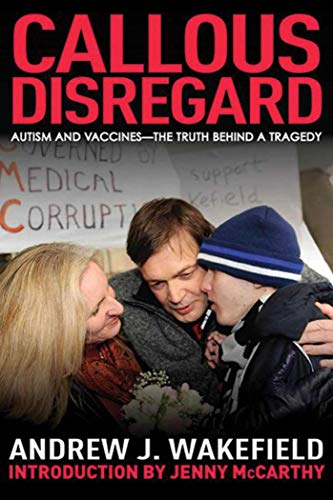
TheAutismDoctor cannot help but weigh in on the recent judge’s reversal of the expulsion of Dr. Walker-Smith, a co-author of the controversial 1998 paper in the British Journal The Lancet, entitled Ileal-lymphoid-nodular hyperplasia, non-specific colitis, and pervasive developmental disorder in children [Early Report]. The popular press has been quick to point out another author, Dr. Andrew Wakefield, as the quack who unnecessarily alarmed the civilized world about vaccine safety. Heck, the media has made British journalist Brian Deer, who spent over 7 years of his life ‘researching’ the story, a hero for uncovering the ‘conspiracy’ and ‘unethical’ goings-on by Dr.W.

Anderson Cooper believes Deer; and pretty much, didn’t let Dr. Wakefield complete one entire sentence during their interview.

No ‘DAN!’ practitioner is immune from this controversy. I rarely explain my Special Needs Pediatric Practice to lay people or even professionals without being asked the question, “What do you think about that guy in England who got kicked out because he said that the MMR causes autism?” “Have you read the original paper?” I ask. “Are you aware that the title does not even contain the  ’A’ word!”

As part of a panel discussion at the University of Miami recently, my attempts to point out the absurd events which followed this research paper were merely dismissed by the professors, who pointed out: 1) “…that the paper incorrectly described a sequential series of patients” and 2) “… it was followed by studies which have countered Dr. Wakefield’s later findings.” In case anyone cares, the answer to #1 is that it was called a “consecutive series” of patients who happened to visit the medical clinic, not to be confused with mathematical, scientific nomenclature that denotes a stronger causative association. And, anyway, who cares about that? A doc doesn’t get kicked out of the country for that lapse in language. Secondly, the numerous papers that have not found molecular ‘pieces’ of measles virus in ASD patients provide helpful information. I’m glad that it’s been studied. Is this the Middle Ages? Being wrong does not warrant expulsion, right?

In spite of the British reversal, there will probably be little change in the general public’s present view about Dr. Wakefield. At the time of this posting, a Google Search reveals the most up-to-date outcome of the issue as tenth on the list for “Andrew Wakefield.” The first nine results make him look like either a kook or a criminal. I’ve watched Andrew Wakefield give several medical presentations and he seems sincere, smart, and determined to help ASD patients.

I guess that the reason why I continue to rail about this issue is the time that is being wasted debating the topic. Discussion is one thing; people talk about the facts of a subject and, hopefully, one or both sides develops a more learned theory. This polarization of opinions obscures work on the really necessary steps; to find a cause(s), therapies, cures, and possibly preventions.

New DAN! Doctors

Monday, March 5th, 2012

The community of practitioners who care for children on the autism spectrum (formerly known as DAN! – Defeat  Autism Now) is evolving into the Medical Academy of Pediatric Special Needs (MAPS). This is due, in large part, to the work of Dr. Dan Rossignol, an early adopter of alternative medicine to address the needs of children with ASD. He has recognized that, in order to gain more traction with the conventional scientific community, and the AAP specifically, formal and authenticated training programs are needed. Research documenting the great strides that affected patients have made will be available in more accepted journals and conferences.

This first conference, Module One, was a very intensive 2-1/2 day course that showcased a great deal of thoughtful information requiring intense concentration as scientific theories were presented and discussed. Although the venue was Planet Hollywood in Las Vegas, I assure you that, after 12 hours of classes, my bed was much more alluring than the blackjack table at the long day’s end.

Rather than simply report the detailed content of these complicated lectures, I wish to impart that this was a great opportunity to learn from others and to share information that represents real care for helping the ASD epidemic. Even at mealtimes, the members took the opportunity to discuss our local practices and to learn about successful protocols, many of which are yet to be studied or published, but bear great relevance to our medical practices.

We heard from some of the top researchers in the field such as Martha Herbert, Dan Rossignol and Judy Van Der Water. I spoke with long-time practitioners (as long as this new specialty has been around) such as David Berger, Jim Neubrander and ‘Dr. Bob’ Sears. I also met physicians from all around the world; in remote US counties from Iowa and Indiana, and from Mexico, India, and South Africa. These were docs, just like myself, who were there to learn new strategies to help our patients. Additionally, I spoke with Nurse Practitioners, Chiropractors, Naturopaths, therapists and even the parents who were attending the TACA conference in the next meeting room.

I have attended various conferences for many decades, from pediatric and neonatal conventions to the Society for Autism Research Institute, to the DAN! classes that have been the mainstay of my education lately. It feels very much like the ‘olden days’ of neonatology when we created our own subspecialty and branched off from general pediatrics. I look forward to the new infrastructure as it specifically addresses the intellectual curiosity and diligent work of all the practitioners who are trying to help your children.

One of the reasons that the term ‘DAN!’ was dropped was that the Divers Alert Network didn’t want to be confused with our band of healthcare workers. I hope we won’t have the same problem and be confused with the other MAPS – The Multidisciplinary Association for Psychedelic Studies!

Categories Archives Links Contact Us

Brian D. Udell MD
2751 Executive Park Drive
Suite 201
Weston, FL 33331
Office phone – 954-873-8413
Fax – 954-384-2287

Email bdumd@childdev.org
Website http://www.childdev.org

© Copyright theautismdoctor.com 2010.
All Rights Reserved